Showing posts with label Sue Lang. Show all posts

Tuesday, April 23, 2013

"Little Europe"

Kleine Europa


BULL VS BEAR


"Little Europe" was on Stubblefield Road, off Hwy 33, 13.5 miles Southwest of Maricopa. California. It was on the Bill Stubblefield Ranch.
Gerald Hudson was raised on the ajoining ranch, he states there was an artisian well
here.


Kleines Europa wurde in der Nähe Maracopa, Kalifornien. Viele deutsche Familien aus dem südlichen Kalifornien würde hier am Wochenende kommen, endet. Susan Lang kam mit ihrer Familie häufig. Susan hatte Spaß ihr Pony reiten und Motorrad.

Susan Lang Vater machte das Bad und Picknick Tisch für die Gruppe.


This gas station was used by the German families when they were visiting
"Little Europe" . It was called the Reye's 76 Station. An old lady sold things
there at the time.


Below is a collection of photos taken by the Lang family of "Little Europe" in the 1960s and 1970s.


Susan Lang's Boy friend (above)in gold jacket


This feature can be seen now and in the back ground of the Lang Family photo with the red out house, built by Mr. Lang.


"Modern day Maricopa"

Maricopa

Physical Address: 400 California Street
Maricopa, CA 93252-0550
Mailing Address: P.O. Box 550
Maricopa, CA 93252-0548
Phone: (661) 769-8279
Fax: (661) 769-8130
Website:
Hours: Tuesday - Friday 8a.m. - 5p.m.

"Gateway to the Sea"
Incorporated July 25, 1911, this "mother city" of the prolific Midway-Sunset Oil Fields is the gateway to the Cerro Noreste/Mt. Pinos recreation area.

Maricopa is the name applied by a Pima Indian Tribe to a neighboring tribe of Uymas inhabiting the Gila River Valley in southern Arizona. How the name reached California is unknown, but it was given to the oil-booming community when a station on the Sunset Western Railroad was established there in 1903.

The real growth in Maricopa began with the opening of the first Lakeview gusher in 1910. The famed gusher helped make Kern County "First in Oil" in the state and nation.


Mr. Hudson (left) was raised across the street from the Ranch, on the Hudson Ranch. He supplied much of the information here.


Some of the other adjacent ranches around little Europe were:
The Reyes family ranch owned and operated the gas station. At the turn of the last century J.D Reyes and some of his relatives supposedly had something to do with
The old yarn of the Grizzly verses the bull mythology of the area. The old lady that worked in the gas station store was Reyes family member. The bull wins!


The Wegis family ranch, whom brought and planted hundred’s of tiger lilies.
Anton, Franz and Gebhardt Wegis came from Germany to the Cuyama Valley in the 1880’s . The ruins of their homesteads can be seen in the area, decomposing sod and adobe features.

English to German translation:
Die Reyes Familienranch Besitzer und Betreiber der Tankstelle. An der Wende des letzten Jahrhunderts JD Reyes und einige seiner Verwandten angeblich hatte etwas damit zu tun,
Der alte Garn der Grizzly Verse der Stier Mythologie des Bereichs. Die alte Dame, die in der Tankstelle gejobbt war Reyes Familienmitglied. Der Bulle gewinnt!


Die Familie Wegis Ranch, die gebracht und angepflanzt hundert von Feuerlilien.
Anton, Franz und Gebhardt Wegis kamen aus Deutschland, den Cuyama Valley in den 1880er Jahren. Die Ruinen ihrer Höfe in der Gegend gesehen werden, zersetzen Rasen und Adobe Features.


NOTES FROM SUSAN LANG'S MOM (1)


NOTES FROM SUSAN LANG'S MOM (2)


NOTES FROM SUSAN LANG'S MOM (3)


NOTES FROM SUSAN LANG'S MOM (4)


Susan Lang today.


Susan Lang when I knew her in 1975


SUSAN LANG WORKING IN 1974


THE LANG FAMILY TRAILER 1973


THE LANG FAMILY HOME IN VAN NUYS, 1973


Party, 1975, LANG


SUSAN LANG IN GERMANY

Sunday, January 13, 2013

- The Palm Springs Aerial Tramway

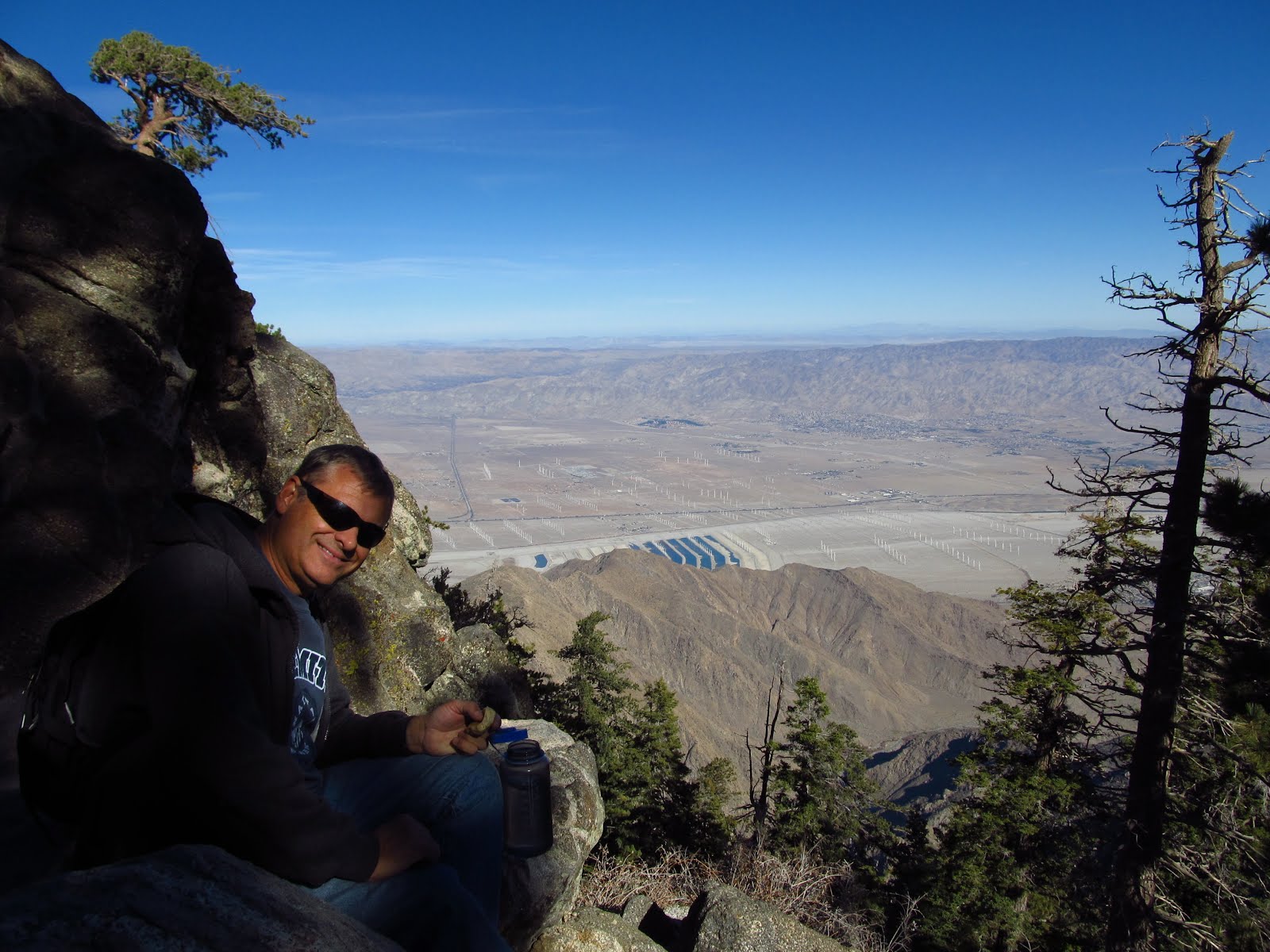
I went here in 2012. AWSOME! "PALM SPRINGS, CA - The Palm Springs Aerial Tramway constructed in rugged Chino Canyon on the north edge of Palm Springs - about two hours by car from Los Angeles and San Diego - did not just happen. It required foresight, planning, financing and, most of all a vision. For years, it was the dream of a young electrical engineer named Francis F. Crocker to "go up there where it's nice and cool". Crocker's dream began in 1935 while he was on a trip to Banning, California, with newspaper publisher Carl Barkow. Mopping his brow in the heat of the day, Crocker gazed on longingly at the still snow-capped peak of Mt. San Jacinto 10,834 feet high. At that moment, "Crocker's Folly,'' as it was soon dubbed by one newspaper woman, was born - a tramway up the sheer cliffs of Chino Canyon. Even though the enthusiasm for the tramway idea was high locally, political roadblocks caused numerous disappointing setbacks. Twice, a tramway enabling bill passed the California State legislature, only to be vetoed by then Governor Culbert Olson. With the outbreak of World War II, the plans were shelved. However, Crocker's vision of a tramway to scale those cliffs to the coolness of the San Jacinto mountains never died. Years after the original plans were shelved, they were dusted off and the battle enjoined. By 1950, technicians were moving ahead on designs for the Tramway, spending more than $250,000 solving riddles of road and tower construction. Funds for the construction of the Tramway were raised by the sale of $8.5 million in private revenue bonds. Not one cent of public funds was used for either the construction or operation of the Tramway. The 35-year bonds paid 5½ percent interest and were paid off in 1996. The Korean conflict was to cause yet another delay, but the ambitious project began to take form in July 1961. Construction of the Tramway was an engineering challenge and was soon labeled the "eighth wonder of the world.'' The superlative was earned because of the ingenious use of helicopters in erecting four of the five supporting towers. Some 20 years later, the Tramway was designated an historical civil engineering landmark. The first tower is the only one that can be reached by road. The helicopters flew some 23,000 missions during the 26 months of construction, hauling men and materials needed to erect the four other towers and the 35,000 sq. ft. Mountain Station. Francis Crocker's dream was completed in 1963; the inaugural ride occurred on September 14th with scores of local and state dignitaries and celebrities on hand. In 1966 a 7,800 ft. granite spire in the canyon was dedicated to Coffman who died in August 1967; Francis Crocker died in 1992. The Tramway announced in 1998 that it was embarking on a modernization program that would see the construction and installation in 2000 of new cars and updating of its facilities. Beginning in September 2000, passengers rode the world's largest rotating Tram cars, constructed by the Tram's original car manufacturer, Von Roll Tramways (now owned by Dopplmayr Tramways). More than 12 million people have been safely transported by the Tramway into the majestic mountains overlooking the Coachella Valley since the attraction opened in September 1963." Santa Rosa and San Jacinto Mountains National Monument "The Palm Springs Aerial Tramway is a major gateway to the Santa Rosa and San Jacinto Mountains National Monument traversing the southerly side of the Coachella Valley – officially designated a treasured natural and cultural resource. The Santa Rosa and San Jacinto Mountains National Monument was established by an Act of Congress on October 24, 2000 “in order to preserve the nationally significant biological, cultural, recreational, geological, educational, and scientific values found in the Santa Rosa and San Jacinto Mountains and to secure now and for future generations the opportunity to experience and enjoy the magnificent vistas, wildlife, land forms, and natural and cultural resources in these mountains". A majority of Mount San Jacinto State Park and Wilderness is part of the Santa Rosa and San Jacinto Mountains National Monument and many of the monument’s beautiful hiking trails begin at the top of the Tram and extend over the San Jacinto Mountains to the outskirts of Idyllwild. The National Monument’s boundary encompasses about 272,000 acres, including 65,000 acres within the San Jacinto Ranger District of the San Bernardino National Forest, 89,500 acres within the Bureau of Land Management’s California Desert Conservation Area, the Santa Rosa Wilderness, which contains 61,600 acres of BLM and Forest Service lands, and 19,470 acres of the Forest Service’s San Jacinto Wilderness. Its boundary also surrounds land owned and administered by the Agua Caliente Band of Cahuilla Indians, California Department of Parks and Recreation, California Department of Fish and Game, other agencies of the State of California, and private landowners. For more information call the Santa Rosa and San Jacinto Mountain National Monument Visitor Center at 760-862-9984 or for a color brochure go to: www.palmspringslife.com/santarosa"